
Lottery Wheeling Guide for Boosting Winning Odds Globally

Most lottery players never realize that the odds can shift dramatically just by choosing the right game and setting clear goals. Picking a lottery is about more than luck, it calls for strategic thinking and a careful look at your risk tolerance. When you start with smart choices and a clear direction, you set the stage for building a lottery strategy that isn’t left entirely up to chance.
Table of Contents
- Step 1: Select Suitable Lottery And Define Objectives
- Step 2: Gather Eligible Numbers And Analyze Patterns
- Step 3: Choose And Configure Your Wheeling System
- Step 4: Generate And Test Wheel Combinations
- Step 5: Simulate Results And Validate Coverage
Quick Summary
| Key Point | Explanation |
|---|---|
| 1. Select the right lottery | Research lotteries for better odds, costs, and prize structures to align with your budget and risk tolerance. |
| 2. Analyze historical number patterns | Gather data on past draws to identify frequency trends, helping to make informed choices rather than random selections. |
| 3. Choose an effective wheeling system | Utilize wheeling strategies to create multiple ticket combinations which enhance your chances of winning by covering more scenarios. |
| 4. Test and validate combinations | Simulate results using different configurations to assess performance and ensure optimal coverage of potential winning combinations. |
| 5. Treat lottery play as entertainment | Always participate responsibly and never invest more than you can afford to lose; it should not be a primary financial strategy. |
Step 1: Select Suitable Lottery and Define Objectives
Selecting the right lottery and establishing clear objectives are foundational steps in developing an effective wheeling strategy that maximizes your winning potential. This initial phase involves understanding lottery mechanics, assessing your personal risk tolerance, and creating a pragmatic approach to number selection.
Begin by researching the specific lottery games available in your region. Not all lotteries are created equal some offer better odds, lower ticket prices, or more favorable prize structures. Look for games with reasonable winning probabilities and ticket costs that match your budget. For instance, local state lotteries might provide more accessible odds compared to massive national or international draws. Learn about effective lottery number selection strategies to refine your approach.
Prospect theory suggests that players often make decisions based on perceived potential gains and losses. This means your lottery objectives should align with your personal risk appetite. Are you seeking frequent small wins or willing to pursue larger jackpots with lower probability? Some players prefer systems that guarantee smaller prize tiers, while others focus solely on top-tier payouts. Your chosen wheeling system must reflect these personal preferences and financial goals.
Warning: Never invest more money than you can comfortably afford to lose. Lottery participation should always be a form of entertainment rather than a financial strategy for wealth generation.
With your lottery selected and objectives defined, you are now prepared to dive deeper into the intricacies of lottery wheeling systems and number combination techniques.
Step 2: Gather Eligible Numbers and Analyze Patterns
Gathering eligible lottery numbers and analyzing their historical patterns is a strategic approach that transforms random selection into an informed decision making process. This crucial step moves beyond pure chance by leveraging data driven insights and mathematical probabilities.
Start by collecting comprehensive historical data for your selected lottery game. Machine learning research suggests that examining past drawing results can reveal subtle numerical trends and frequency patterns. Explore advanced lottery number generation methods to enhance your analytical approach. Focus on understanding number frequency distribution frequency of specific numbers repeated occurrences and potential clustering patterns. Look for numbers that appear more consistently while avoiding assumptions about guaranteed future outcomes.

Advanced data analysis techniques recommend tracking several key metrics. Pay attention to hot and cold numbers numbers that have been drawn frequently or infrequently in recent draws. Examine the distribution across different number ranges and understand how often certain numerical combinations emerge. Some players create detailed spreadsheets or use specialized software to track these intricate patterns transforming raw data into strategic insights.
Warning: Remember that past performance does not guarantee future results. While pattern analysis provides valuable insights statistical randomness means no method can precisely predict lottery outcomes.
With your number analysis complete you are now ready to apply sophisticated wheeling techniques that will help maximize your potential winning configurations.
Step 3: Choose and Configure Your Wheeling System
Choosing and configuring the right lottery wheeling system is a critical strategy that transforms your approach from random chance to calculated probability. This step involves selecting a systematic method that maximizes your potential of winning by intelligently arranging number combinations.
Lottery wheeling is fundamentally about creating multiple ticket combinations that guarantee a minimum win if specific numbers are drawn. Learn about comprehensive lottery wheeling strategies to understand different system configurations. Research from constraint programming suggests designing minimal lottery wheels that reduce total ticket expenses while maintaining comprehensive number coverage. Essentially you want to create a system that strategically covers multiple number combinations without requiring an excessive number of tickets.
Typical wheeling systems range from simple full wheel configurations to more complex abbreviated and key number wheels. A full wheel generates all possible combinations but can be expensive a key wheel focuses on specific numbers you believe are more likely to appear and an abbreviated wheel offers a balanced approach by creating strategic subset combinations. Your choice depends on your budget risk tolerance and the specific lottery game you are playing. Advanced techniques involve mathematical modeling to optimize the number of tickets and potential winning configurations.
Warning: While wheeling systems improve your mathematical odds they do not guarantee winning. Always approach lottery participation as entertainment and never invest more than you can comfortably afford to lose.
With your wheeling system selected and configured you are now prepared to implement your strategy and generate your lottery tickets systematically.
Step 4: Generate and Test Wheel Combinations
Generating and testing wheel combinations is a critical phase where mathematical precision meets strategic lottery play. This step transforms your theoretical approach into actionable number combinations that maximize potential winning opportunities across multiple ticket configurations.
Lottery mathematics provides the foundation for creating intelligent wheel combinations. Use our EuroJackpot generator tool to streamline your number selection process. Drawing from combinatorial principles understand that each combination represents a unique probability landscape. Start by systematically mapping out your selected numbers across different wheel configurations full wheel key wheel or abbreviated wheel ensuring comprehensive coverage while managing ticket costs. Cumulative prospect theory suggests creating combinations that balance potential gains with calculated risk minimizing unnecessary ticket expenditure.
To effectively test your wheel combinations develop a methodical evaluation strategy. Simulate multiple drawing scenarios using probability calculations to assess each combination potential performance. Pay attention to how different number arrangements impact your overall winning probability. Some advanced players create spreadsheet models or utilize specialized software to track and analyze multiple wheel configurations statistically. This approach allows you to refine your strategy progressively adjusting your combinations based on mathematical insights and historical drawing patterns.
Warning: While sophisticated wheel combinations improve mathematical odds they cannot guarantee winning. Approach each combination as a calculated risk rather than a definitive solution.
With your wheel combinations generated and tested you are now prepared to move forward with implementing your strategic lottery approach.
Step 5: Simulate Results and Validate Coverage
Simulating lottery results and validating your wheel combination coverage represent the critical quality assurance phase of your strategic approach. This step transforms mathematical potential into actionable insights by rigorously testing your number configurations across multiple probabilistic scenarios.
Data visualization research highlights how simulation can dramatically improve risk perception and strategic decision making. Learn more about lottery simulation techniques to refine your approach. Begin by running comprehensive simulations that model thousands of potential drawing scenarios. These simulations help you understand how your chosen number combinations perform under different statistical conditions. Advanced models analyze the rarity and randomness of potential outcomes ensuring your wheel system provides robust coverage across multiple potential drawing scenarios. Look for patterns that demonstrate consistent performance rather than isolated lucky streaks.
To validate coverage effectively develop a systematic evaluation framework. Create detailed performance metrics that track key indicators such as number hit frequency probability distribution and potential prize tier achievements. Some sophisticated players use computational models that simulate millions of drawing scenarios to stress test their wheel configurations. This approach allows you to objectively assess your strategy mathematical soundness identifying potential weaknesses and refining your number selection approach. Pay close attention to how your combinations perform across different probability ranges ensuring comprehensive coverage without unnecessary redundancy.
Warning: Simulation provides statistical insights but cannot predict future lottery outcomes with absolute certainty. Treat these results as analytical guidance not guaranteed predictions.
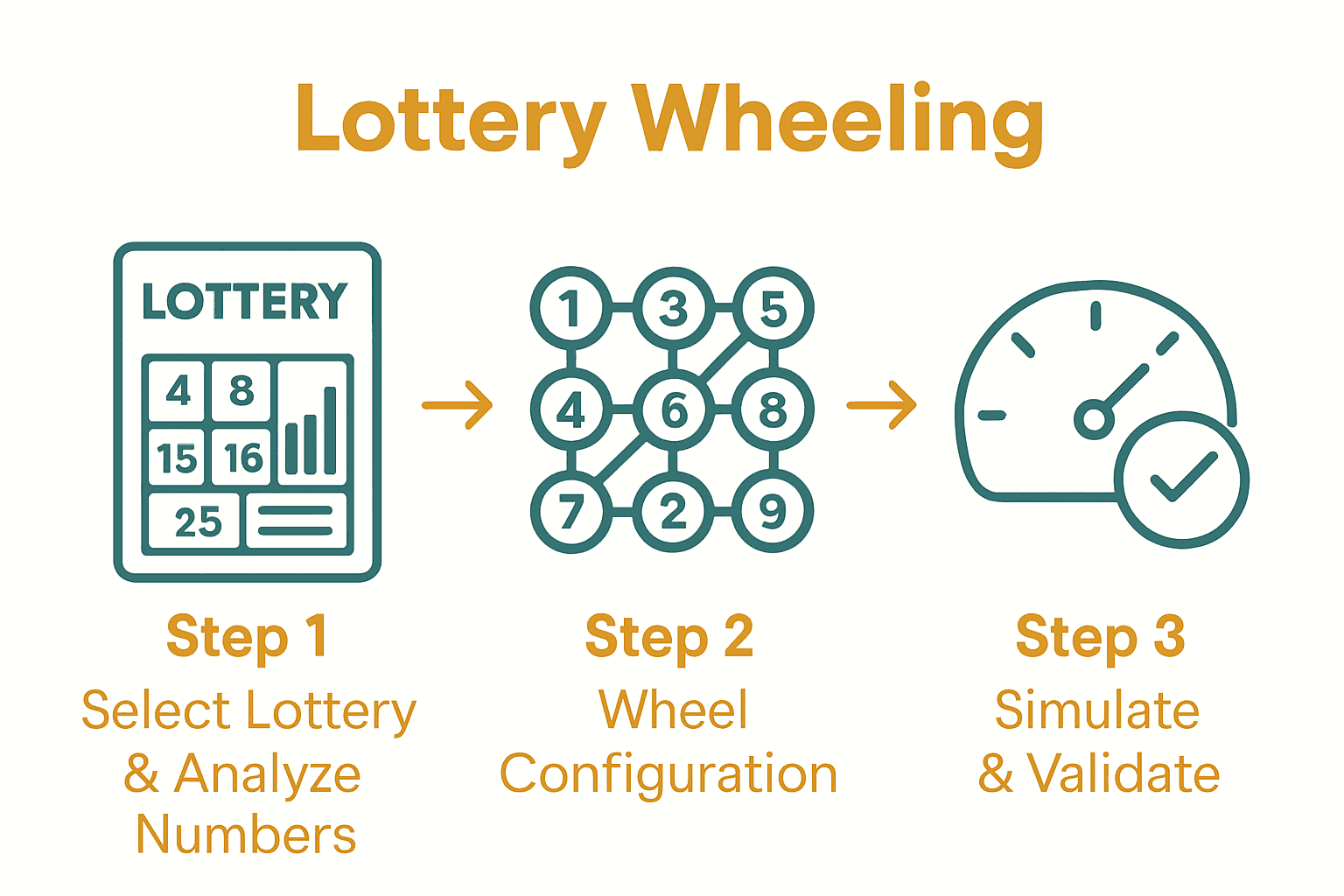
With your wheel combinations simulated and validated you are now prepared to implement your refined lottery strategy with increased mathematical confidence.
Enhance Your Lottery Wheeling Strategy with LottoApex
If you found the detailed steps of defining your lottery goals, analyzing historical number patterns, and carefully configuring a wheeling system insightful but challenging to execute on your own, you are not alone. Many players struggle with the complexity of generating effective number combinations and validating their coverage confidently. This is where LottoApex can make a real difference for you by providing advanced tools that simplify these tasks and boost your chances using data-driven strategies like wheeling systems and number simulations.

Explore our number generators and simulators that bring mathematical precision to your lottery play. Our platform supports multiple popular lotteries worldwide and offers user-friendly interfaces to test and optimize your combinations safely. Do not rely on guesswork when you can leverage proven algorithms and comprehensive analysis to design smarter wheeling systems tailored to your risk preferences. Visit LottoApex today, and take control of your lottery strategy with tools trusted by thousands seeking consistent improvement in their lottery attempts.
Frequently Asked Questions
What is lottery wheeling and how does it work?
Lottery wheeling is a method of creating multiple combinations of lottery numbers to enhance your chances of winning. By selecting a larger set of numbers and arranging them systematically, you can ensure certain wins if specific numbers are drawn. Start by choosing your desired numbers and explore various wheeling systems like full, abbreviated, or key wheels to maximize coverage.
How do I select the right lottery game for wheeling?
To select the right lottery game, research available options based on their odds, ticket prices, and prize structures. Look for games with favorable winning probabilities that suit your budget. Ideally, focus on local or state lotteries, as they often have better odds than large national draws.
What type of numbers should I gather for analysis?
Gather historical data of the lottery game you chose, focusing on the frequency of drawn numbers and patterns. Track metrics such as hot and cold numbers to identify trends that might inform your selection strategy. Use this data to narrow down the most promising numbers for your wheeling system.
How can I test my wheel combinations effectively?
You can test your wheel combinations by simulating various drawing scenarios to check how each combination performs. Create a systematic evaluation strategy that includes tracking probability distributions and potential prize tier achievements. Aim to analyze at least several hundred simulations to identify consistent patterns.
What are the risks of using a wheeling system?
The primary risk of using a wheeling system is that it still relies on random chance; no strategy guarantees a win. Always approach lottery participation as entertainment and only invest what you can afford to lose. Limit your spending based on predetermined financial goals to manage potential losses.
How can I validate that my wheeling system provides good coverage?
To validate your wheeling system, run comprehensive simulations to model thousands of potential outcomes and analyze their performance. Track key indicators such as number hit frequency and prize tier probabilities to assess your system’s robustness. Ensure your combinations cover various probability ranges without excessive redundancy.